The IHR’s new blog has now been launched, covering news and activities from across the whole Institute. All of the old posts from here can be found at the new location, and there will continue to be frequent updates on all the IHR’s digital projects.
 This is my last post for History SPOT and the last blog post for this particular blog. The History SPOT blog is closing down after almost four years. That doesn’t mean that the History SPOT website is closing down; it’s just in the process of a reinvention alongside other changes occurring with the Institute of Historical Research’s online presence.
Over the coming months you will begin to see changes with the History SPOT website. First, the podcasts have just moved over to the IHR website, integrating them with the seminar pages. In addition IHR podcasts are now appearing on iTunes-u; You Tube; and the School of Advanced Study website. This part has actually been happening since late last year.
Second, the History SPOT website will become solely a research training platform, moving the focus entirely towards training courses. In this regard we have a lot in the works already.
Material Cultures
In partnership with the University of Kent and the Museum of London the IHR have been helping to organise a series of workshops around the topic of material culture. These workshops have looked at the meaning of objects, their historical uses, and different methods for analysis. In 2014 the results from these workshops will be redeveloped for presentation online in the form of a FREE short course.
Managing your data
In December the University of Hull held the first in a series of workshops on the topic of managing your data as an historian. In February the IHR will be holding a second workshop on this topic and then the University of Sheffield will be holding a third workshop in April. But this is only the start. In 2014 an entire online course will be made available for FREE on History SPOT that will guide you through the research process and enable you to easily and quickly develop a data management plan, often essential for research proposals and useful for research itself.
Palaeography
A year ago the School of Advanced Study published the first module of the InScribe Palaeography materials course on History SPOT. Another module is still in development looking more closely at scripts. This will be ready for launch sometime soon.
All good things…
Although I personally will still have a role with developing these courses I am saying goodbye to the podcast service entirely. I have now moved over to the School of Advanced Study working on digital projects for them, which will, admittedly, intersect with the IHR and History SPOT website from time to time.
It’s sad for me to close down this blog. It was my first one, indeed, it’s because of this blog that I have developed others and spent time investigating and researching blogging practises in more general terms (see my Blogging for Historians blog for some examples of this). I will still be blogging elsewhere as well, such as the SAS Blog and my own research blog, Sixteenth Century Scholars. I hope too to contribute occasionally to the new IHR blog, and it is to this matter that I would like to particularly turn your attention.
Although the History SPOT blog is coming to an end the posts will live on in the new IHR blog that has just been launched. You will find all the posts there alongside the archive from other IHR blogs, all rolled into one place. I’m hopeful that there will still be the occasional review summary of a podcast on this new blog. There will certainly be updates regarding research training online and updates about changes to the History SPOT website as and when they happen.
For now then I will say goodbye and thank you for reading this blog over the last four years. It’s been great fun and I hope it’s also been useful and interesting to you, my readers.
The new IHR blog, including History SPOT blog posts can be found at The IHR Blog. For IHR podcasts take a look at the events section of the IHR website. New podcasts can also be found on the University of London iTunes-u account, the School of Advanced Study website and You Tube pages.
Posted in Project update | Leave a Comment »
Metropolitan History
7 December 2011
Applying new spatial techniques in the study of late medieval London
Justin Colson (CMH/IHR)
 As part of the postmodern turn in the study of history, the focus on space (alongside the usual questions of who, when, why) has become a mainstream topic of study. Justin Coulson summarises some of the latest studies to involve spatial data and in particular looks at how the digital is helping to transform what can be achieved and discovered through such studies. Coulson notes current projects such as Locating London’s Past and Mapping London – both of which use geo-referencing to create accurate maps of pre-modern London. Then there are postgraduate and postdoctoral studies such as Tim Bishop’s use of the Antwerp Alderman register to enable him to create an accurate map of the property boundaries in the fifteenth century city. At the University of York, Gareth Dean is using tenement records to spatially understand nearby Swinegate, whilst Nick Holder is locating London friaries and their development through time. Carley Dearing (Liverpool) is creating 3D maps of medieval Winchester and Marlas Craine is employing ‘space syntax’ to understand public spaces in the nineteenth century.
Coulson’s own research is focused on neighbourhood in medieval London. Early modernists claim that the rise of the self (amongst other things) led to the decline in neighbourly activity that had previously existed. However, this previous existence of a neighbourhood community is generally taken for granted and has yet to take on any properly understood shape. Coulson therefore has sought to use spatial technologies to find out to what degree there actually existed a neighbourhood in late medieval London. To achieve this Coulson needed to find out who lived where and map this onto an accurate medieval layout of the city.
Posted in History SPOT, SPOT newsletter | Tagged GIS, London, mapping, postmodern, spatial data | Leave a Comment »
Harrington, petitioning and the construction of public opinion
Edward Vallance (University of Roehampton)
Franco-British History seminar
8 November 2012
Abstract: Historians have noted that the republic depicted in Harrington’s ‘Oceana’ (1656) allowed little room for political debate beyond the confines of the senate. However, ‘Oceana’ did permit the localities to petition Parliament, allowing some channel for the expression of the popular voice, albeit in a form framed by the phylarchs, ‘the princes of the Tribes’. The Harringtonian circle itself engaged in petitioning activity in 1659, as the restoration of the Rump Parliament in May 1659 revived hopes of a new republican constitution. These political interventions were part of a wider petitioning campaign by the ‘well-affected’ in support of a republican settlement. Ruth Mayers, in her work on the revived English Commonwealth, has argued that these petitions provide evidence of popular support for the republic. However, Harrington’s own view of the value of this petitioning activity, as expressed in Valerius and Publicola (1659) was much more pessimistic, seeing the exercise as essentially fruitless.
.png)
Harrington’s disappointment was understandable: the petitioning activity of 1659 bore little resemblance to the orderly scheme of political communication from periphery to centre mapped in ‘Oceana’. The cliques of the ‘well-affected’ who submitted supportive petitions represented both a far more exclusive political constituency than the Harringtonians had hoped would be involved in settling a new Commonwealth, and a far more varied cross-section of the political nation than the ‘natural aristocracy’ that Harrington believed alone had the right to ‘debate’. Moreover, this petitioning activity was arguably orchestrated by the Rump and its propagandists rather than representing grassroots support for the Commonwealth. Nonetheless, this paper will suggest that the use of petitioning in 1659 to legitimate both the government and its programme set an important precedent that was followed by the Crown into the Restoration era.
Posted in History SPOT, SPOT newsletter | Tagged Harrington, Oceana, politics, senate | Leave a Comment »
The East India Company at Home: Domestic Interiors, Public Histories and Material Cultures
Margot Finn (University College London)
Franco-British History seminar
28 February 2013
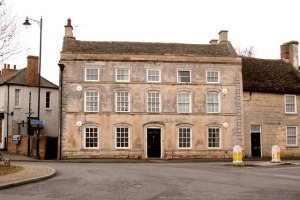 Abstract: The East India Company at Home, Domestic Interiors, Public Histories & Material Cultures’ discusses the context and preliminary findings of a 3-year collaborative research project based in the History Department at University College London. In recent decades, the Georgian country house has featured in films, television, tourism and history as an icon of ‘Englishness’ (and, to a lesser extent, of Scottish, Welsh and British identities). This project contrasts this narrowly national representation of the Georgian country house to the increasingly ‘global’ forces that shaped country house construction, purchasing and furnishing in the Georgian era. Its focus is on both ‘Oriental’ luxury objects and the significance of the country home and its furnishings for the families of the English East India Company. How did the aspiration for an ‘English’ home sustain Company men’s participation in colonialism in India? How (and why) were Indian fortunes domesticated through the purchase of country houses in Britain? What role did Chinese, Indian and Japanese luxuries play in building effective country houses? Addressing these issues has involved the East India Company at Home team in new forms of collaboration, new forms of public history, aimed at illuminating the global underpinnings of British national identities.
Posted in History SPOT, SPOT newsletter | Tagged East India Company, London, luxury items | Leave a Comment »
Digital History seminar
9 October 2012
Camille Desenclos (ENC, Sorbonne)
Rethinking Historical Research in the Digital Age: A TEI Approach
![shutterstock_9709540[1]](https://ihrprojects.files.wordpress.com/2013/07/shutterstock_97095401.jpg?w=300&h=165)
Abstract: Historical research cannot be conceived without a close relation to physical text: paper is still the main source. However the emergence and subsequent multiplication of digital technologies within the historical field have tended to modify the examination of sources. This change is particularly apparent for text editions: how is one to manage the transfer from the manuscript age to a digital one? Can sources be understood and analysed without physical support?
This paper will be based on experiences of using electronic editions of early modern texts, specifically diplomatic correspondences such as L’ambassade extraordinaire du duc d’Angoulême, comte de Béthune et abbé de Préaux vers les princes et potentats de l’Empire. TEI, a XML-based language, has been chosen for those editions. Using such a structured language – a far cry from the plain text created by classical text editors – implies changing the conception of what an edition is. We need not just think about texts anymore but only about the historical information contained within the text and which has to be highlighted in terms of the research. This requires researchers to think more about what they want and what they want to show in their studies. Above all, it allows researchers to track specific features such as diplomatic formulas and then to facilitate their analysis.
The aim of this talk is to ask if and how digital technologies have changed how historians view sources and even if they have changed the historical studies themselves; how TEI can be used to create new kind of editions. This paper will try to show how, if well used, TEI and digital technologies highlight and add to the results of historical studies.
Biography: Camille Desenclos is currently completing her PhD at the École nationale des Chartes where she is also engaged in leading several projects to create electronic editions of medieval and early modern texts including an edition of the correspondance of Antoine du Bourg. Her PhD is entitled ‘The Communication Policy of France in the Holy Roman Empire at the beginning of the Thirty Years War (1617-1624)’. A fundamental part of her PhD research includes creating electronic editions and the encoding and ciphering of diplomatic correspondence and structures in related medieval charters. Camille has given numerous conference papers largely concentrating on the Text Encoding Initiative and its application to her research. She was also a Visiting Researcher at the Department of Digital Humanities (DDH) at King’s last year. An electronic edition of the ‘Ambassade extraordinaire des duc d’Angoulême, comte de Béthune et abbé de Préaux’ which she has written will be available online shortly.
Posted in History SPOT, SPOT newsletter | Tagged Digital History, Text Encoding Initiative | 1 Comment »

Tsar Alexander II (d. 1881) (wikipedia)
Whose Home? Jewish migration and local reaction in the East End of London 1870-1914
Oliver Betts (York) Metropolitan History seminar 13 February 2013This is a guest post from the IHR intern Paris Jones (Roehampton)
In this seminar, Oliver Watts discusses and explores the cultural differences between Jewish migrants and their non-Jewish neighbours in East End London which caused tension between the two groups. After the assassination of Tsar Alexander II in 1881, there was an increase of Jews moving into the East End of London. Watts notes that the Jewish migrants were not welcomed by their non-Jewish neighbours and as they moved in, their gentile neighbours moved out.
As more Jewish migrants began to settle in London, the gentile neighbours began to worried about their way of living. They felt that the new migrants were taken all the jobs from them. Oliver Watts suggested that the attitude towards the Jewish migrants was not because of their religious background but because of the cultural differences.
The way the Jewish migrants dressed and lived was foreign to their neighbours. The Jewish migrants lived off of little and worked long hours. They rented in the areas they worked so that they could live and worked at the same place. There were many similarities between local working class and Jewish migrants. The anxiety of the influx of the Jewish migrants allowed propaganda to be created in the area. Jewish families co-existed with non-Jewish families and rarely crossed over. Not only did this cause tensions but cultural separation and misunderstanding.
Posted in SPOT newsletter | Tagged East End London, Jewish, Jews, London | Leave a Comment »
Voluntary Action History
30 January 2012
Gareth Millward (London School of Hygiene & Tropical Medicine)
Disability and Voluntarism in Britain, 1965-1995: an effective force in policy making?
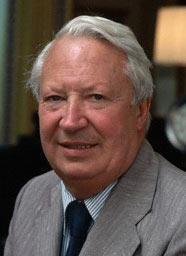


Ted Heath (wikipedia)
Go back to the 1970s and you might see Ted Heath ridding around on a ‘Noddy’ car. Depending on which generation you come from you will either know what this is or not.
What has this got to do with a History SPOT podcast I hear you ask? Well, the voluntary action history seminar held a session back in January 2012 in which Gareth Millward mentioned Ted Heath’s ride in a Noddy car as part of a talk on the role of voluntary organisations in the adaptation of disability legislation between the 1960s and 1990s. It seems, on this occasion at least; only through practical experience did politicians listen to those arguing that the Noddy car was unsafe. The car was withdrawn soon afterwards.
In this paper Millward investigates the political climate leading up to the disability acts and in particular the role of various types of voluntary organisations and individual networks that played a role either through lobbying or via provision of expert evidence. Millward looks at the topic through the lens of the polar-opposite models of the medical (i.e. that disability is a medical issue) and social (that disability is a construct of society and that the main issue is that a person cannot perform a specific social function and thus is discriminated against). These models formed the bank-bane to discussions, debates and lobbying around the issue of disability.

A ‘Noddy car’ or invalid Carriage c. 1976 (wikipedia)
Several organisations are singled out as particularly important to the discussion. First are those organisations who actively lobbed government through the use of academic research. First are the Disability Income Group (DIG) who were founded in 1965, then the Disability Alliance and Royal Association for Disability and Rehabilitation (RADAR) both founded and active in the 1970s. Then there are the groups formed by those actually with disabilities some of which were not prone to lobbying or playing politics but to actively helping those who needed their help on the local or national level. This second group included the Union of Physically impaired against Segregation who would later become part of the British Council of Organisations of disabled people. The third group were societies such as the Spastics Society (now renamed SCOPE).
Millward’s podcast is well worth listening to if you have even a passing interest in the subject. Taken in context of other podcasts by the Voluntary Action History seminar it acts as a reminder that history is not just an academic subject to be studied but a subject that should enable debate on current day affairs. Great strides have occurred in enabling people with disabilities to overcome those difficulties and reach an equal level of activity in society. However, there is more work to be done and podcasts such as these can be taken to help formulate new debates and discussions based upon older ones.
Posted in History SPOT, SPOT newsletter | Tagged Disability, invalid carrage, noddy car, Ted Heath | Leave a Comment »
On 12 December 2013 the University of Hull will be hosting a one day FREE workshop for History postgraduates and early career researchers to help you better manage your data. The event is called History and Data Management: necessary bedfellows? To sign up to this event email Chris Awre (c.awre@hull.ac.uk), indicating your name, Department and University, plus any dietary or other requirements you may have in attending this event. A number of bursaries are available to help with travel costs so please indicate if you are interested in one of these in your email. For full details about the workshop click here.
This is what Chris Awre from the University of Hull has to say about managing data.

Hull History Centre (our venue)
The recent announcement of the first of three events on history research and data management being held by the AHRC-funded History DMT project offers the chance to understand to what extent these two, apparently disparate areas, are linked. Research data are more usually associated with scientific disciplines, computers and equipment churning out numbers that can be analysed in multifarious ways. This image may be stereotypical, if true, but also both hits and misses key points in appreciating the impact that research data has across all disciplines today.
The hit is in the use of computers to produce and store data. This is not a feature simply of science now, though. The field of digital humanities has highlighted the value of computing to non-scientific disciplines, and the ability to apply computing to research questions in these areas. Data centres like the UK Data Archive have long existed to capture  the datasets produced, and have provided valuable resources for subsequent research by others. Whilst this type of research might have been a specialised niche at one point, computing capability now makes it far more straightforward for data to be compiled by any researcher. And if computing can be used in this way, the outcomes of that use, the data, will need managing.
The miss is in the definition of data. Data can be numbers, certainly, but it can also be many other types of material collected together to inform research analysis. The University of Leeds research data management web pages, whilst recognising the scientific origins of data management, describe well the breadth of what can be considered data. The materials gathered by historians, be they numbers, images, multimedia, textual or statistical, can clearly fit within this scope.
At the centre of discussing data management for historians though, is not the ‘data’ per se, but more importantly ensuring that any materials gathered, created, or observed by history researchers are well managed. This ensures they can support and inform the research effectively, and add to the body of knowledge that is generated through research overall. In raising the bar for managing data, it highlights the value that data has. Quite often data acts as the Cinderella to the publication that is based on the data; the advent of data publications (e.g., Journal of Open Archaeology Data) highlights this and provides an additional route for research dissemination.
The History DMT project and the forthcoming events are producing materials to assist with managing data when conducting history research. The AHRC are specifically targeting the work at postgraduate and early career researchers, and all are encouraged to consider how they manage data in their research, either through the events or generally. Come and join us to discuss and feed into the materials being produced, and ensure that history data gets the respect it deserves.
To register for the workshop please e-mail Chris Awre (c.awre@hull.ac.uk), indicating your name, Department and University, plus any dietary or other requirements you may have in attending this event. If you are interested in one of the bursaries please note this in your e-mail. For full details of the event check our previous blog post.
Posted in History DMT | Tagged AHRC, Arts and Humanities Research Council, Data management, research, UK Data Archive, University of Hull, workshop | Leave a Comment »
Going Underground: Travel Beneath the Metropolis 1863-2013
Tim White
“Crossing Oceans to Cross Rivers: Trans-Atlantic Knowledge & Capital in Tunnelling History”
18 January 2013
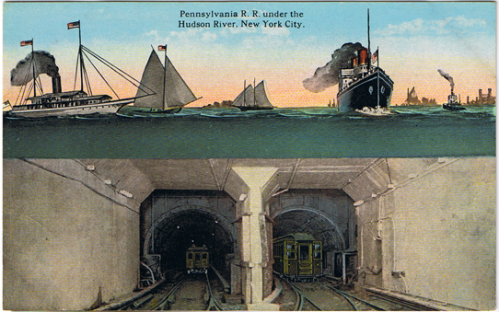

Pennsylvania Railroad tunnel, Hudson River (Wikipedia)
Abstract: Not long after the London Underground opened, American railroad companies sought to tunnel under the Hudson River, so they could connect their lines from New York City to all points west. Although the earliest, failed tunnelling effort in 1874 was strictly American, the second attempt was decidedly British. The 1888 Hudson River Tunnel Company was not only backed by British capital, but also relied upon the “greathead shield”, important for London’s Tower Subway. It also failed to complete the tunnel under the mile-wide Hudson, but the half-finished sections it left behind facilitated the completion of a railroad tunnel in 1908. The Chief Engineer for this final push was none other than Charles M. Jacobs, a brit.
This paper is about trans-Atlantic transfers of knowledge and capital in late 19th and early 20th century tunnel projects, with a focus on the efforts to tunnel under the Hudson River. Charles M. Jacobs, the British mastermind behind New York’s first subaqueous gas tunnels in 1894, the 1908Hudson & Manhattan tunnels, and the 1910 tunnels of the Pennsylvania Railroad, was certainly a key player in these transfers, but the paper is not just about him. In addition to Jacobs, Norwegian-born Ole Singstad was crucial to both the 1908 project and the Holland Tunnel, while the subterranean tracks of the original Pennsylvania Station were inspired by the Gare de Orsay in Paris. For too long, American transportation historians have written about tunnelling without a proper trans-Atlantic lens. This paper will redress this imbalance.
Biography: Tim White completed his Ph.D. in History at Columbia University with Kenneth Jackson in 2007, and is now an Assistant Professor of History at New Jersey City University. As a scholar, he has published a review essay in the Journal of Urban History, a full-length, peer-reviewed essay in Performing Arts Resources, and has a manuscript under contract and forthcoming from The University of Pennsylvania Press. This manuscript chronicles the theatre-related craftwork (costumes, scenery, lights, shoes, etc.) of the American stage from 1880-1980. By highlighting these activities as they dominated and then abandoned Times Square over the course of many decades, White argues that planning policy and structural economic shift transformed Times Square, if only briefly, into the Flint, Michigan, of American popular culture. It presents the departure of theatre-related craft from Times Square in the 1960s and 1970s as a major cause of the larger theatre district’s struggles with crime, prostitution, and drugs. His new research focuses on New York Harbor, its regional economy, and the late 19th and early 20th century tunnelling projects that were crucial to its continued growth.
Posted in History SPOT, SPOT newsletter | Tagged Hudson river, London Underground, New York, railroad, tunnel | Leave a Comment »
History SPOT website (click to view)

Main Topics
Twitter (@ihrdigprojects
Tweets by IHRDigProjectsRelated Blogs
Archive
- February 2014
- January 2014
- December 2013
- November 2013
- October 2013
- September 2013
- August 2013
- July 2013
- June 2013
- May 2013
- April 2013
- March 2013
- February 2013
- January 2013
- December 2012
- November 2012
- October 2012
- September 2012
- August 2012
- July 2012
- June 2012
- May 2012
- April 2012
- March 2012
- February 2012
- January 2012
- December 2011
- November 2011
- October 2011
- September 2011
- August 2011
- July 2011
- June 2011
- May 2011
- April 2011
- March 2011
- February 2011
- January 2011
- December 2010
- November 2010
- October 2010
- September 2010
- July 2010
- June 2010
- May 2010
- April 2010
- March 2010
 History SPOT